THE EVIDENCE
IS
DEFINITIVE • INDISPUTABLE • DAMNING
The evidence of plagiarism and academic fraud:
01
The copying was deliberate
The dissertation reproduces another work on the same subject—including distinctive translations, unusual variations, and matching errors—while omitting citations. The extent and specificity of these parallels support the conclusion that the source was knowingly used without acknowledgement.
02
The emails expose undisclosed authorship
Whistleblower emails reportedly show Omar Suleiman directing that additional material be added to his dissertation and praising material supplied by another author. If authenticated, this correspondence is direct evidence of undisclosed third-party involvement in work submitted under his name.
03
The refusal to address the evidence
Omar Suleiman has intentionally refused to address the report’s central findings, explain the matching passages, or refute the disclosed correspondence. The evidence presented against him therefore remains publicly unrebutted.
click to zoom in on image
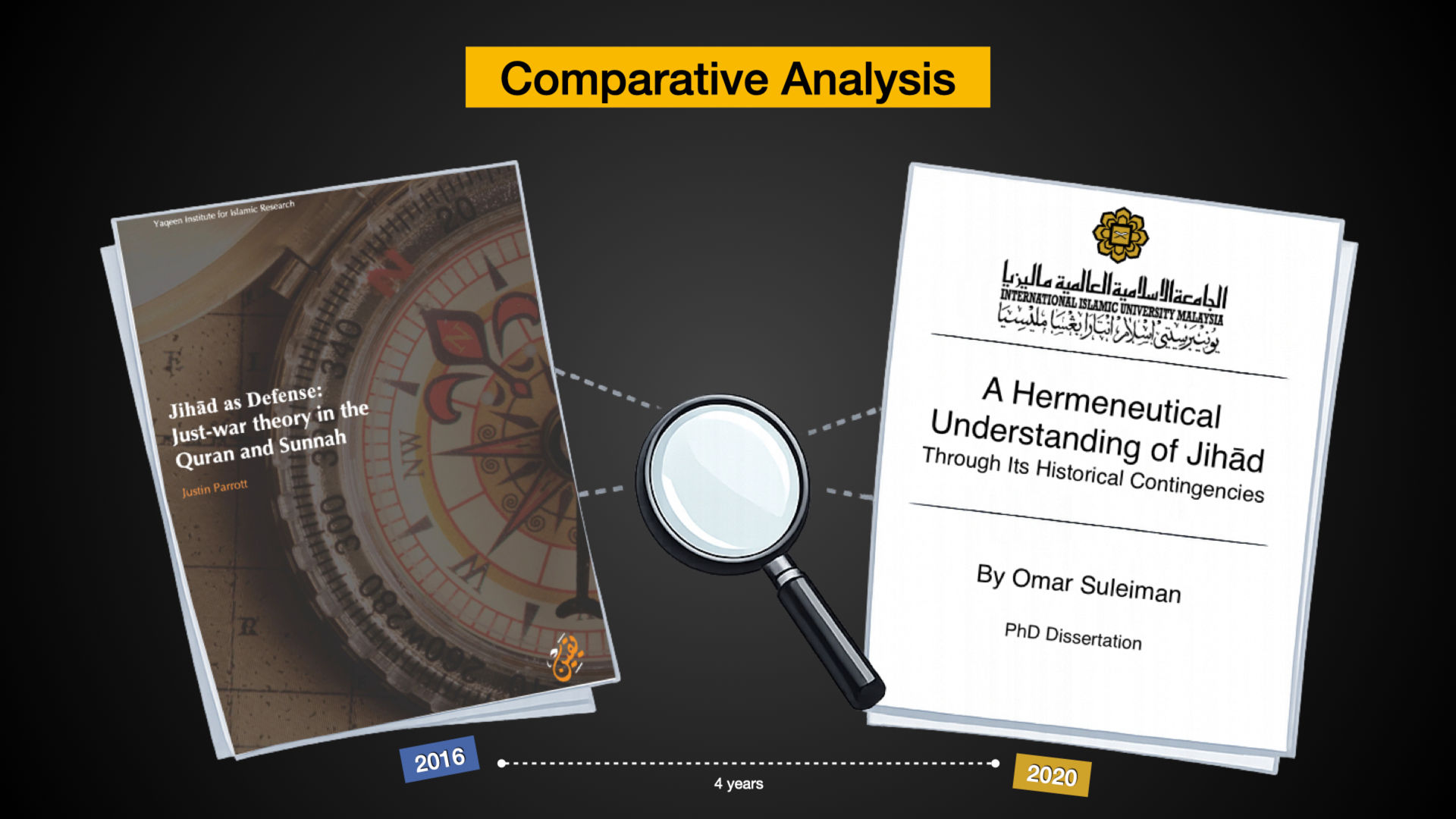
The following exhibits clearly demonstrate Omar Suleiman copying custom translations and word-for-word passages from Justin Parrott’s paper on the SAME topic of Jihād … a paper which was published on Yaqeen Institute’s own website FOUR years prior to Omar Suleiman’s dissertation acceptance by IIUM.
*Omar Suleiman is the CEO of Yaqeen Institute
click to zoom in on image
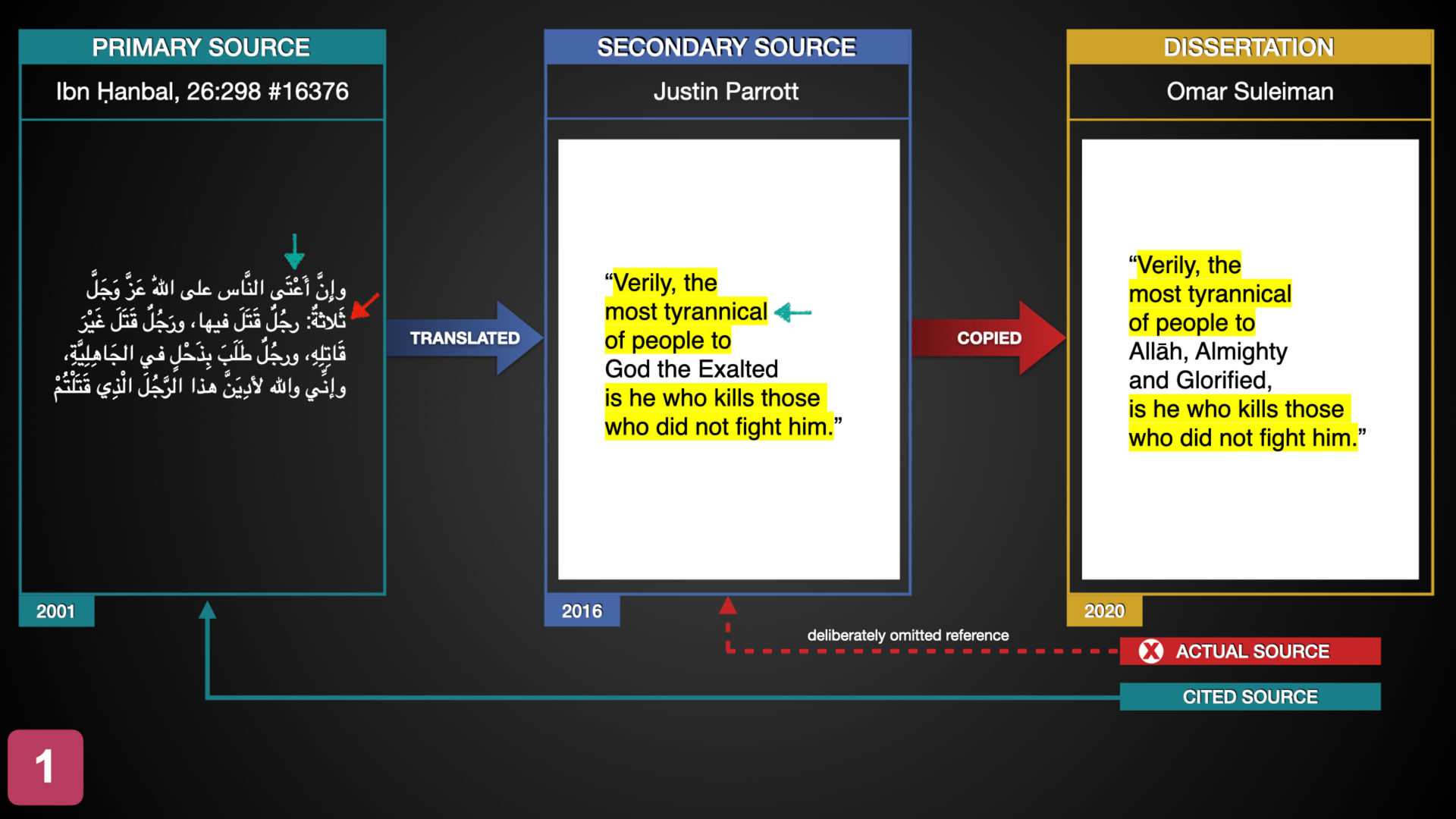
Exhibit 1 — Identical Translation and Identical Omission
Suleiman’s dissertation reproduces Parrott’s distinctive translation almost word for word, including the unusual rendering “most tyrannical,” while making only minor substitutions such as “Allah” for “God.” More significantly, both texts omit the Arabic word meaning “three” in exactly the same place — an omission created when Parrott excerpted only part of the original hadith. Reproducing both the customized wording and the identical truncation strongly indicates that Suleiman relied on Parrott’s paper, yet the dissertation cites only the primary source and gives Parrott no attribution.
click to zoom in on image
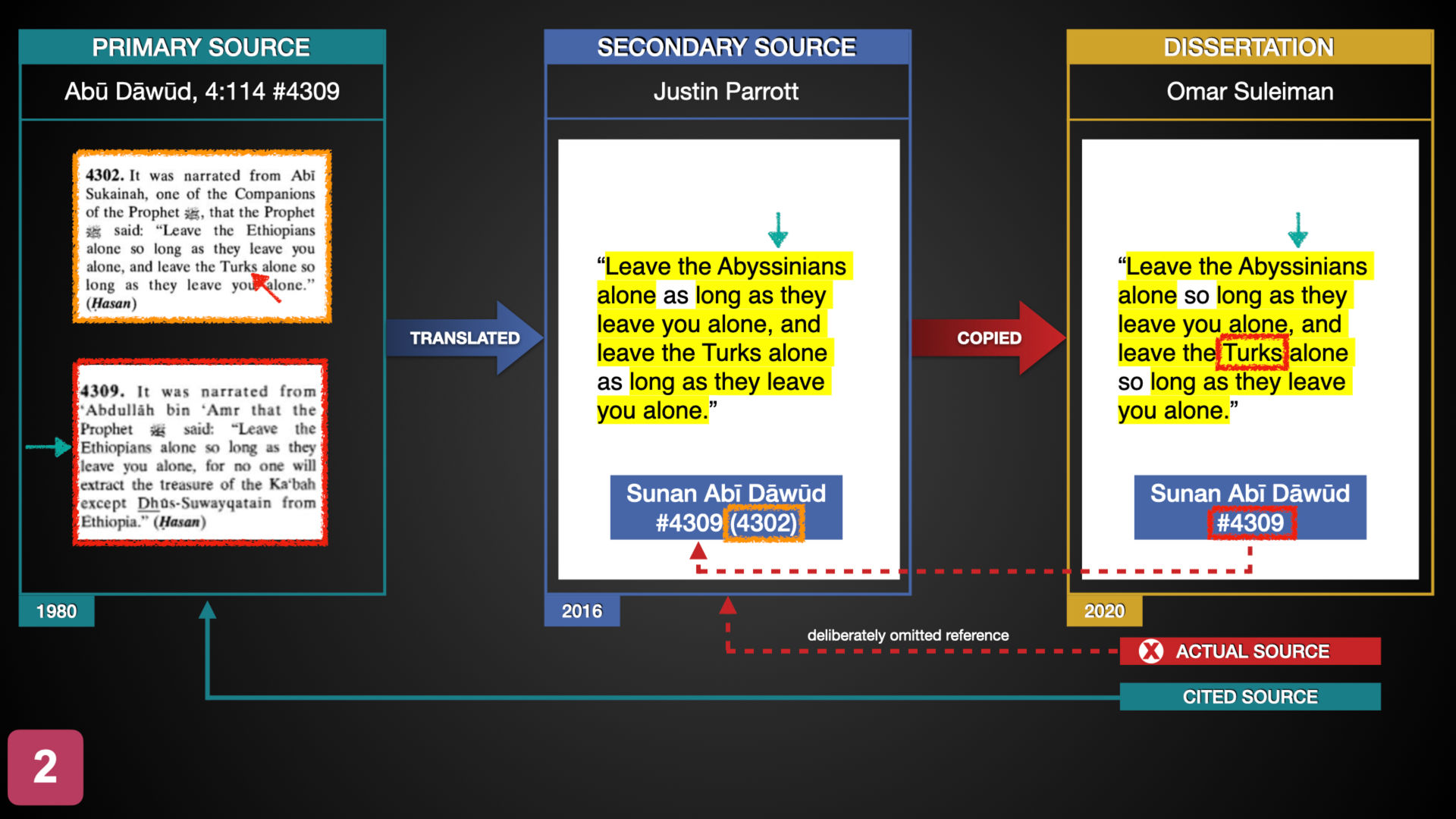
Exhibit 2 — Copied Wording and Inherited Citation Error
Suleiman closely reproduces Parrott’s custom translation, including Parrott’s choice of “Abyssinians” rather than the source’s “Ethiopians,” with only a minor change from “as” to “so.” The dissertation also mentions the Turks while citing hadith 4309 — even though that passage contains no reference to them. Parrott’s citation lists “4309 (4302),” and it is hadith 4302 that mentions the Turks. The matching language and inherited reference error provide especially strong evidence that Suleiman took the passage from Parrott’s paper without identifying it as his source.
click to zoom in on image
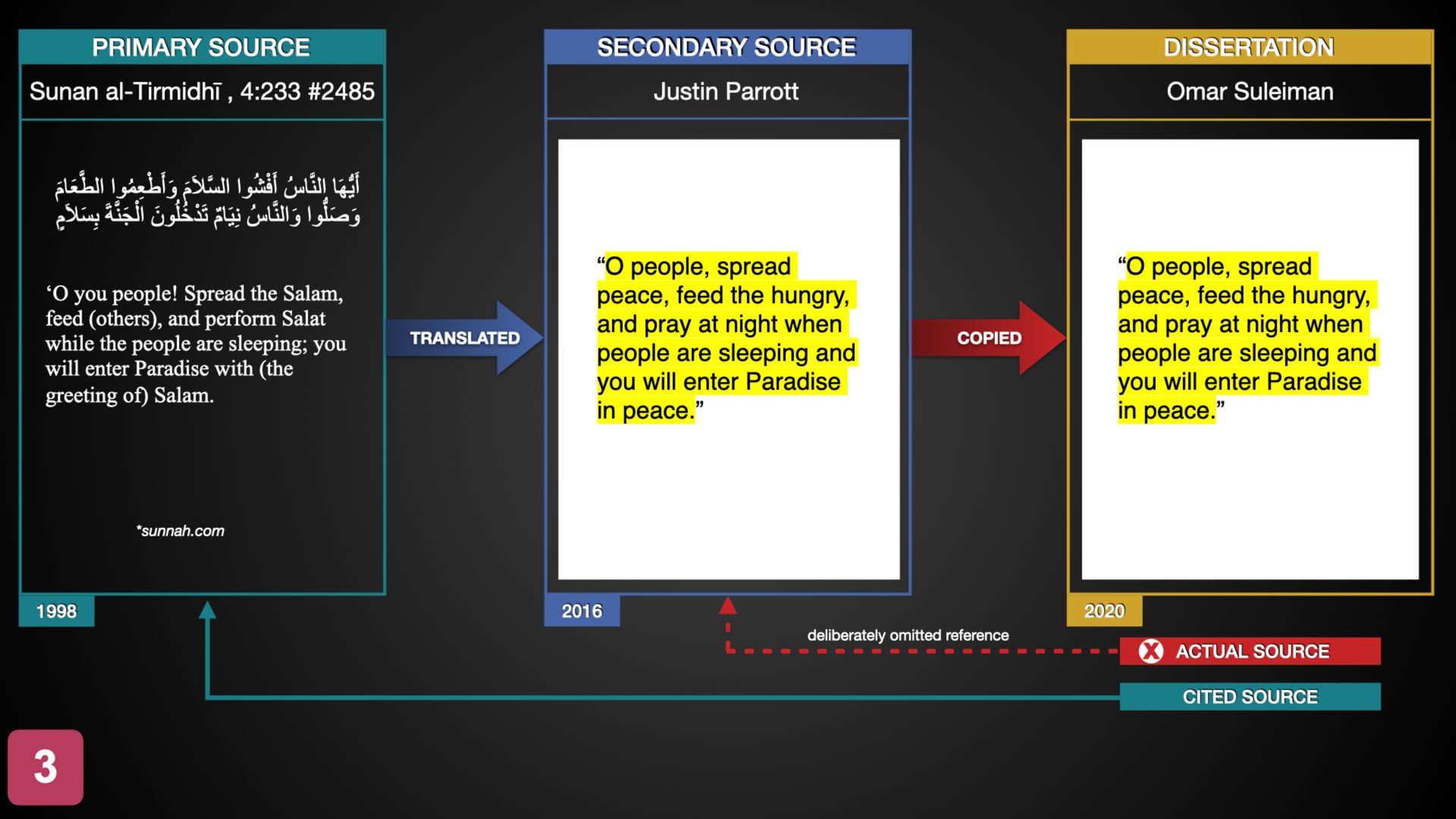
Exhibit 3 — Verbatim Reproduction
The dissertation reproduces Parrott’s custom translation verbatim. Because this is Parrott’s own English rendering — not standardized wording taken from a published translation — the exact match cannot be explained merely by both authors consulting the same primary source. Suleiman cites that original source but does not credit the paper from which the matching English text appears to have been taken.
click to zoom in on image
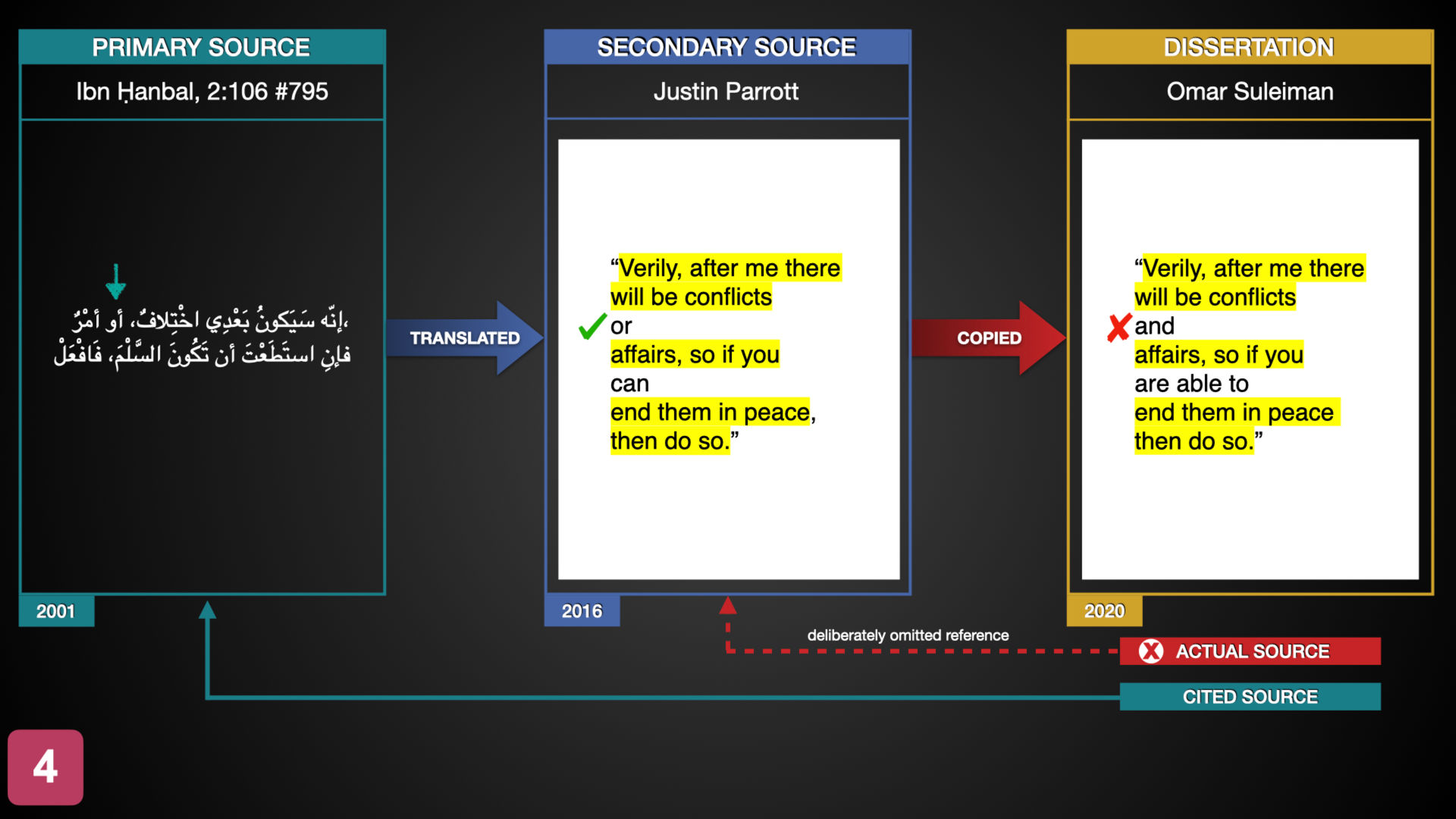
Exhibit 4 — Near-Verbatim Copy With an Incorrect Alteration
Suleiman reproduces nearly all of Parrott’s custom translation while changing a small number of words. One alteration replaces “or” with “and,” even though the Arabic word aw means “or.” That error is difficult to reconcile with an independent translation from the Arabic, but readily explained as an unsuccessful modification of Parrott’s English wording. Despite the extensive textual overlap, Parrott’s paper is not cited.
click to zoom in on image
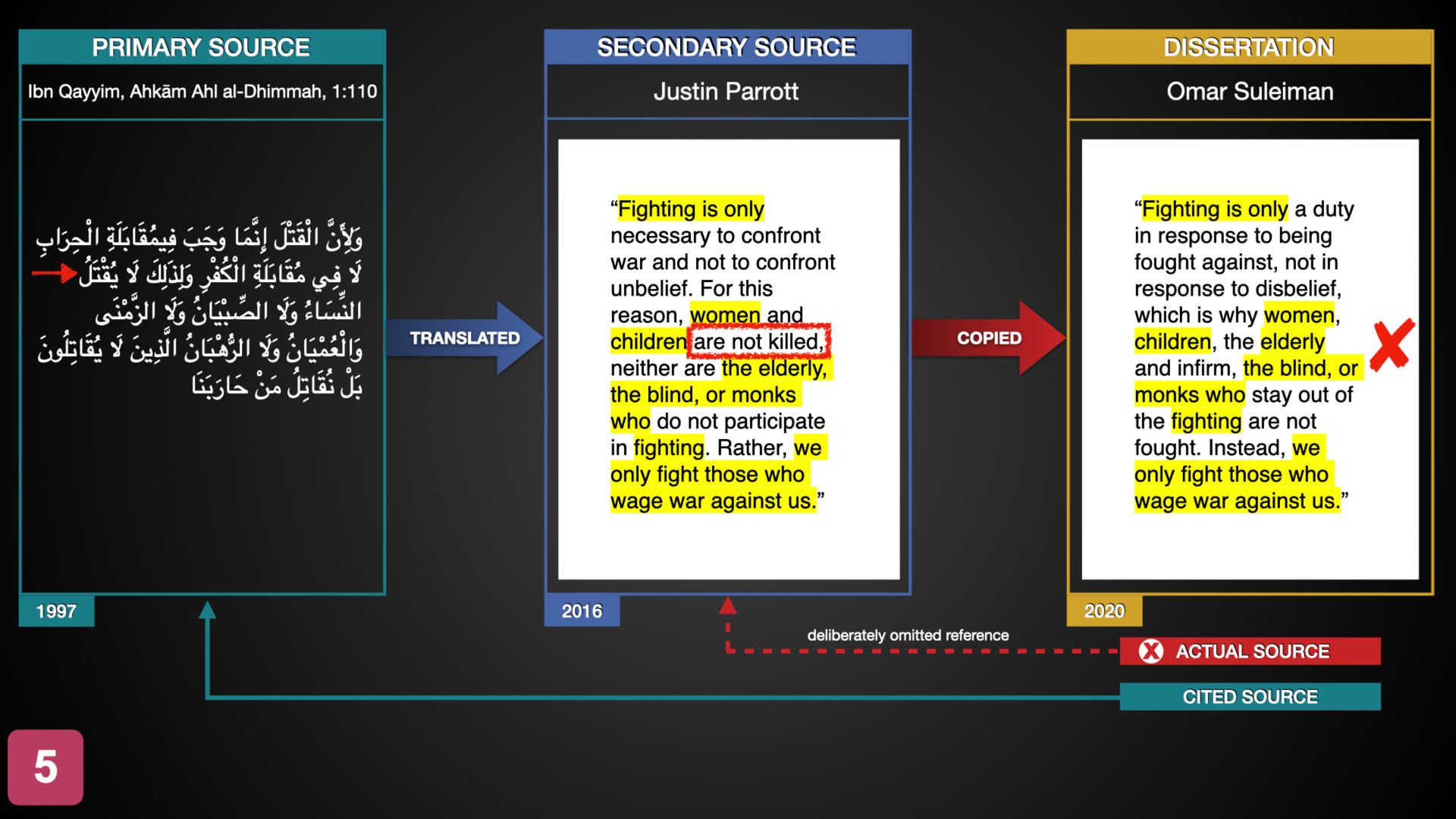
Exhibit 5 — Rewording That Omits Part of the Arabic
This comparison shows Suleiman retaining the structure and substance of Parrott’s translation while selectively rewording portions of it. In doing so, the dissertation omits the Arabic verb yuqtalu, meaning “is killed.” An independent reading of the original Arabic should have accounted for that phrase. The combination of close dependence on Parrott’s wording and failure to capture material present in the primary source indicates that the English passage was adapted from Parrott rather than independently translated.
click to zoom in on image
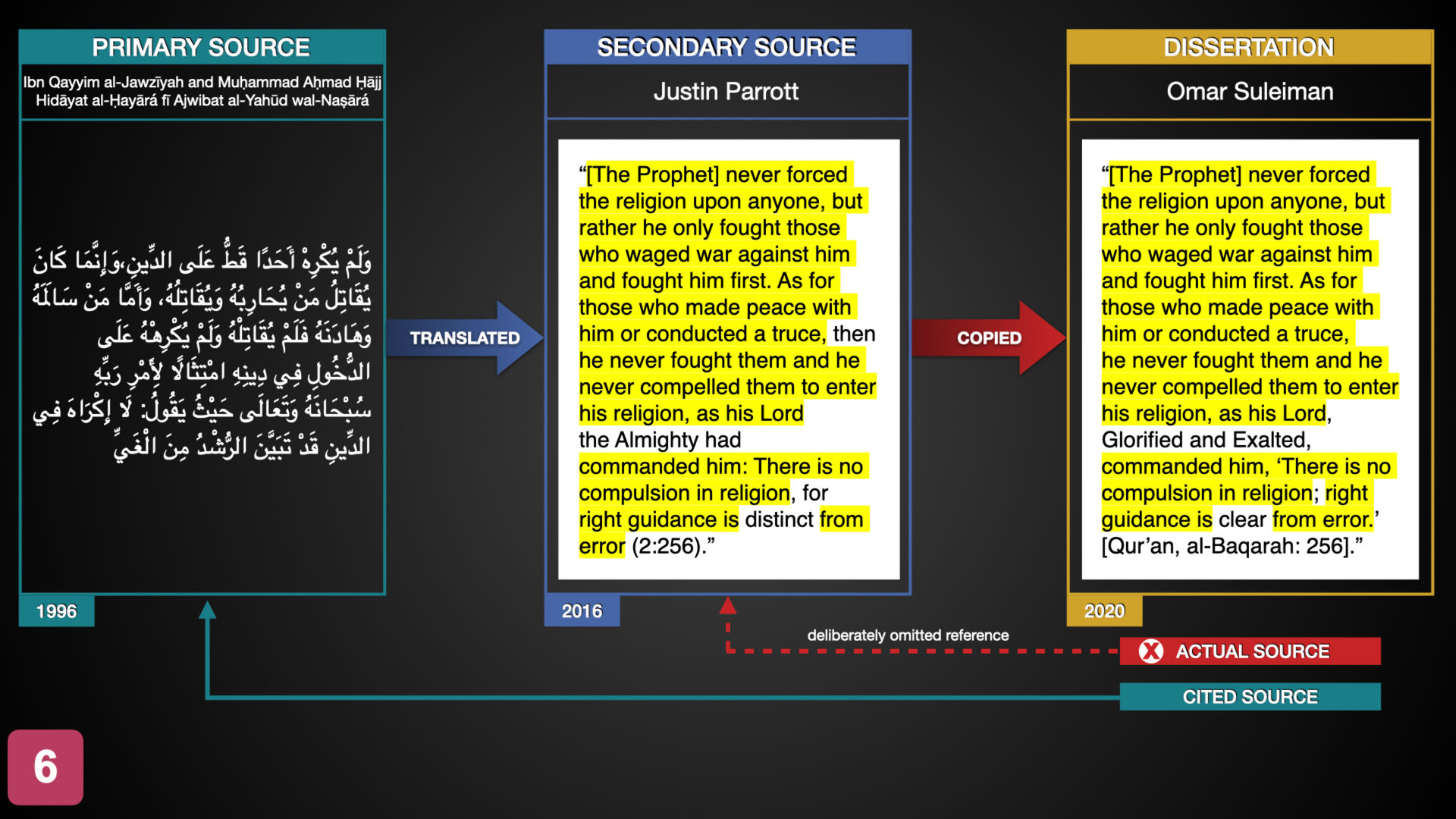
Exhibit 6 — Matching Words and Punctuation
Suleiman’s passage follows Parrott’s custom translation almost word for word and punctuation for punctuation, with only a few substitutions and a change to the presentation of the Qur’anic citation. Such extensive agreement in a independently produced translation would be highly unlikely, particularly when it includes the same phrasing, sentence structure, and punctuation. The superficial edits do not account for the underlying match, and Parrott’s translation is again left unattributed.
click to zoom in on image
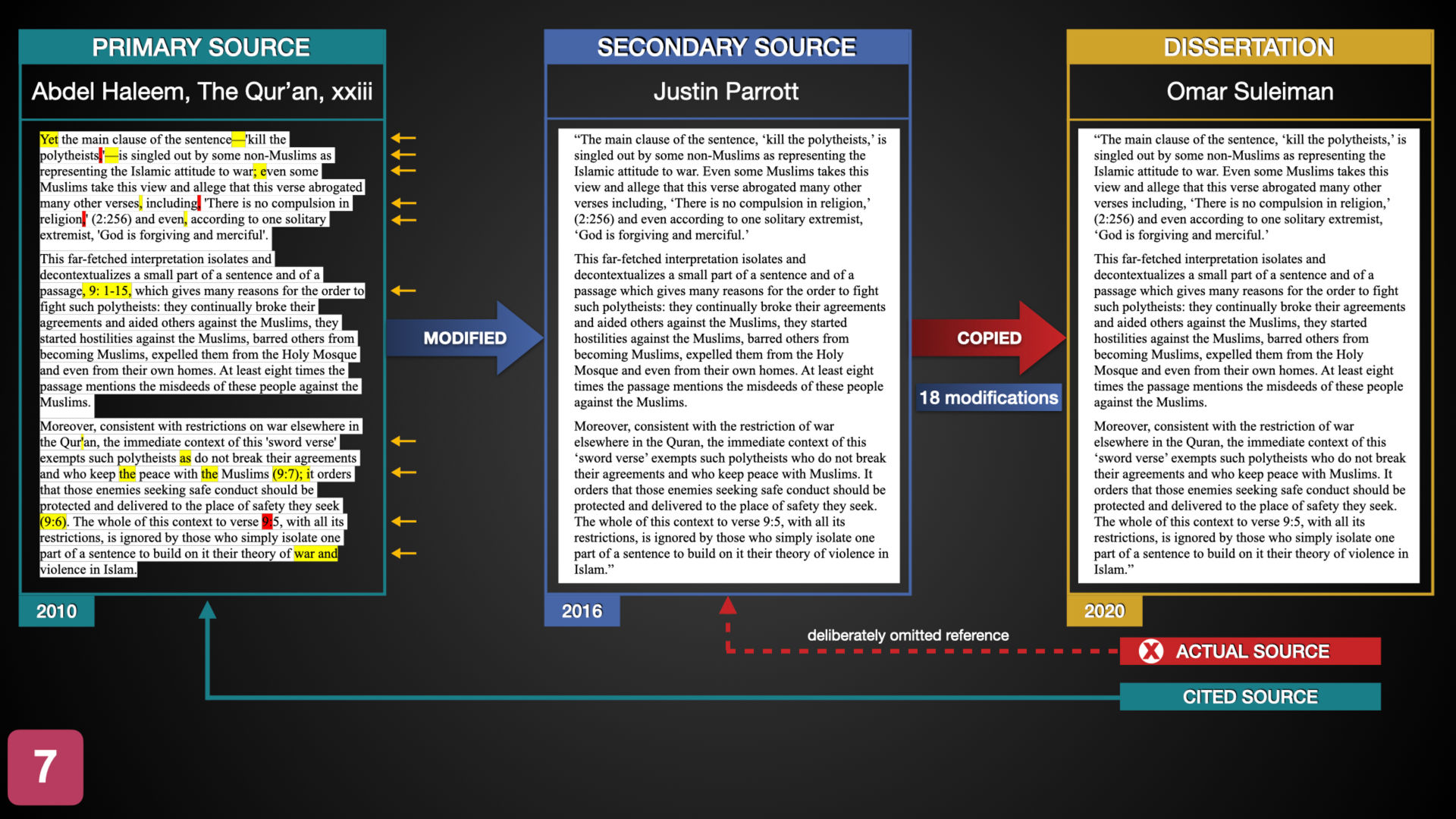
Exhibit 7 — All 18 Editorial Modifications Reproduced
Here, the primary source is Abdel Haleem’s published Qur’an translation. Parrott modified that text through 18 specific deletions, punctuation changes, omissions, and other edits. Suleiman reproduces all 18 of those modifications — not simply the underlying published translation. This complete correspondence is powerful evidence that the dissertation drew from Parrott’s edited version rather than independently consulting Abdel Haleem’s text, yet Parrott is not identified as the immediate source.
click to zoom in on image
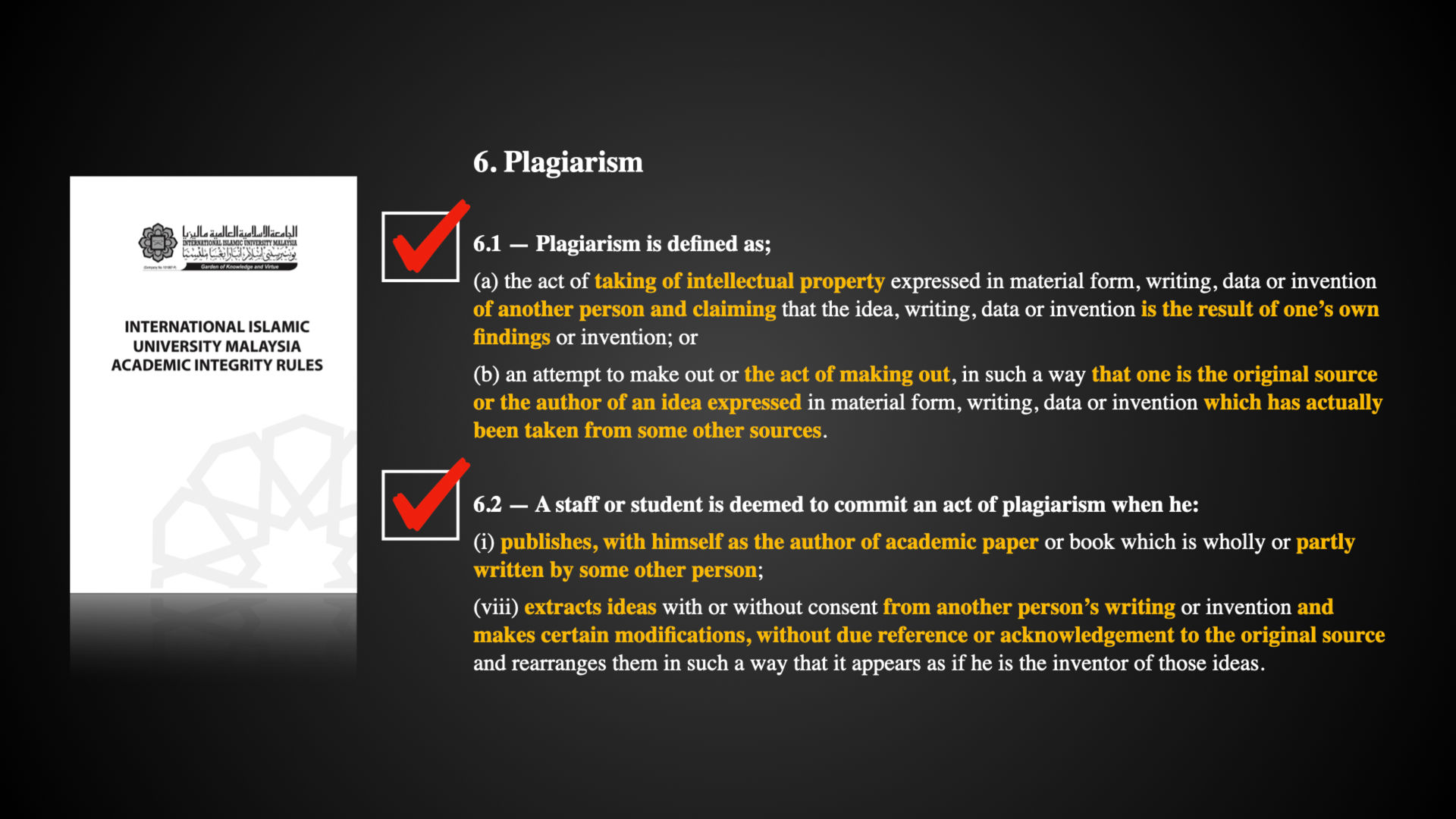
IIUM Plagiarism Policies
IIUM’s Academic Integrity Rules explicitly prohibit presenting another person’s writing or ideas as one’s own and using material without proper acknowledgment. Omar Suleiman’s unattributed copying and misrepresentation of authorship therefore clearly violate IIUM’s own plagiarism policies.
click to zoom in on image
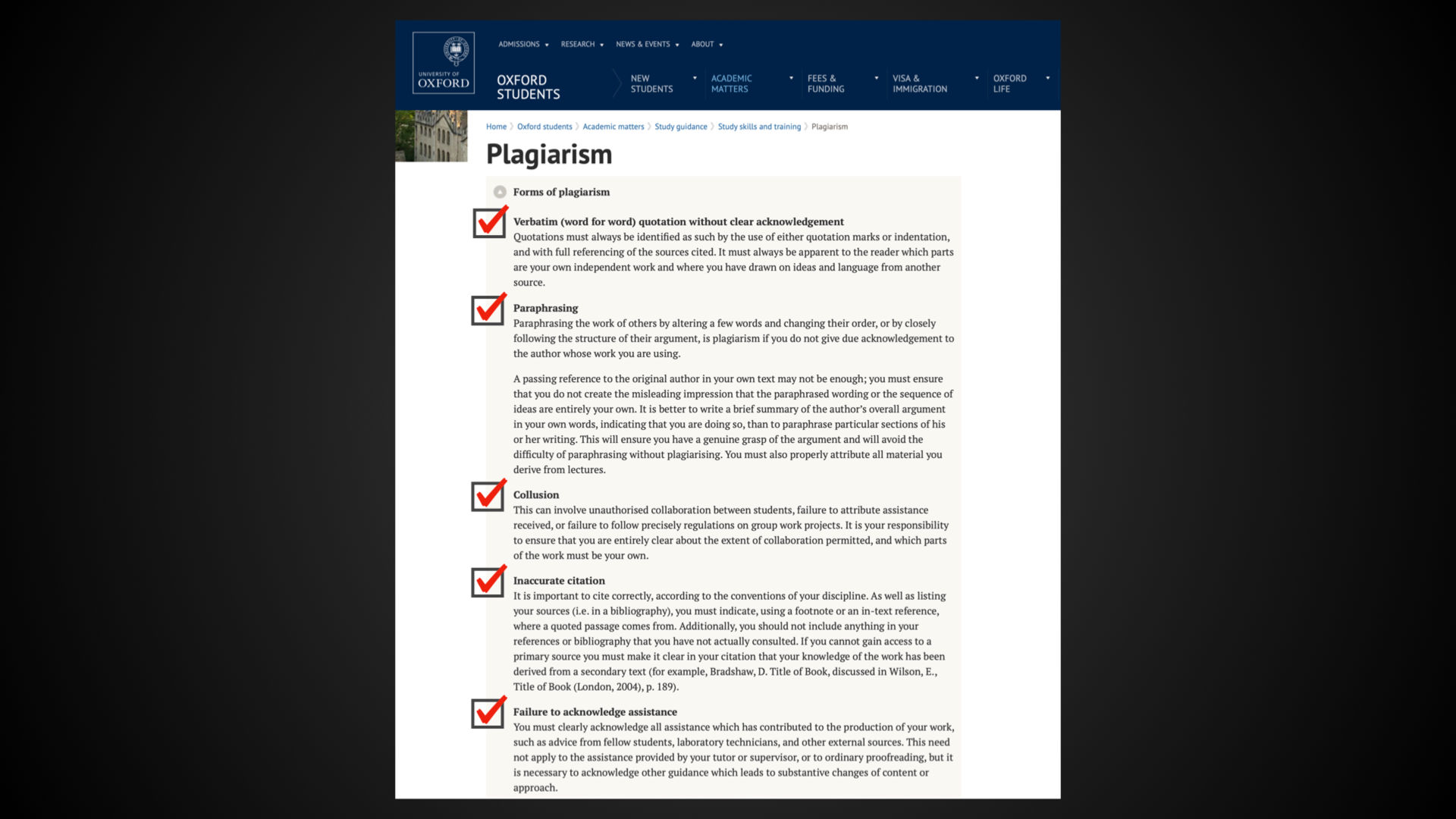
Oxford Plagiarism Definitions
Omar Suleiman’s reckless copying and pasting without attribution AND secretly directing someone else to write portions of his dissertation make him guilty of all of the above 5 forms of plagiarism, as defined by the University of Oxford.
THE EMAIL TRAIL
EXHIBIT A
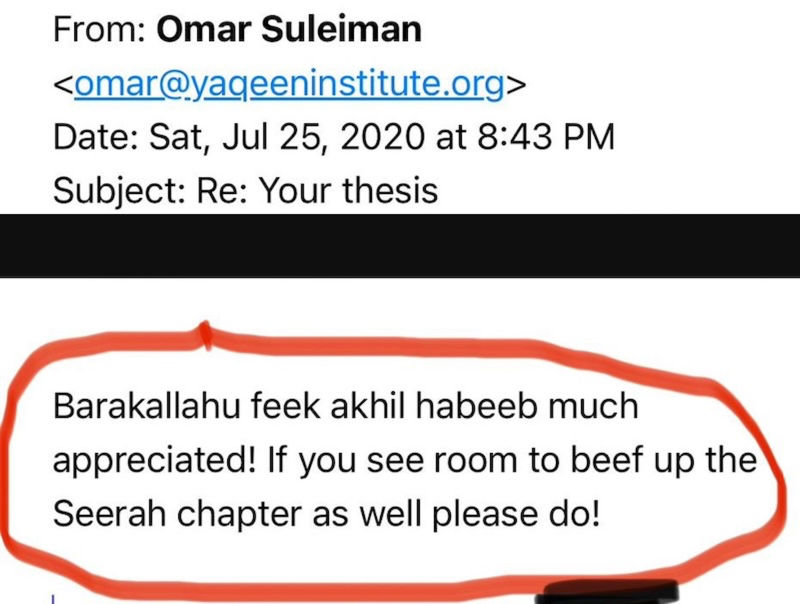
“Barakallahu feek akhil habeeb much appreciated! If you see room to beef up the Seerah chapter as well please do!”
EXHIBIT B
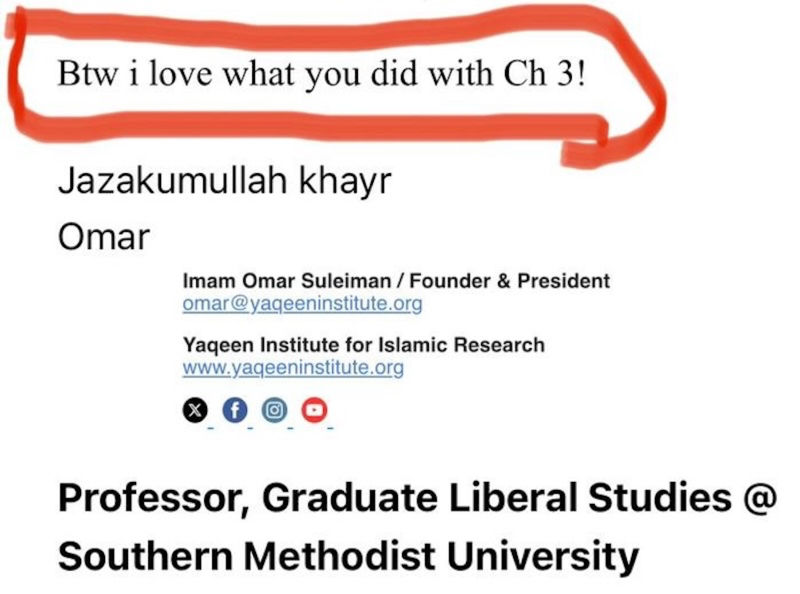
“Btw i love what you did with Ch 3!“
EXHIBIT C
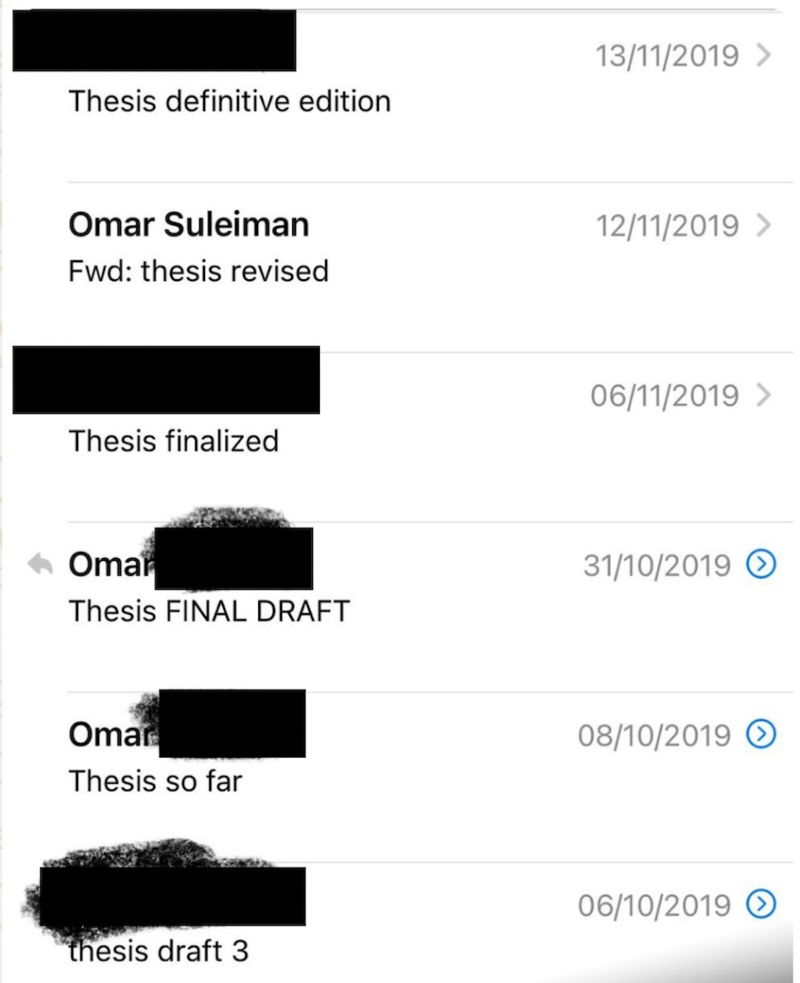
Email exchanges showing showing Omar Suleiman’s collaboration with the whistleblower
Direct Evidence in His Own Words
These screenshots are direct communications from Omar Suleiman during the preparation of his dissertation — not second-hand allegations or speculation. They document repeated exchanges of thesis drafts, his request to “beef up” a specific chapter, and his acknowledgment of what the recipient “did with Ch 3.”
Taken together, the messages show that he sought and accepted substantive outside help with dissertation content — not merely proofreading or general feedback. Yet that assistance was neither referenced nor attributed in the dissertation. His own words establish the request, the collaboration, and the resulting contribution, providing compelling documentary evidence that the work was not produced solely as independent scholarship.
His Silence Is His Admission of Guilt
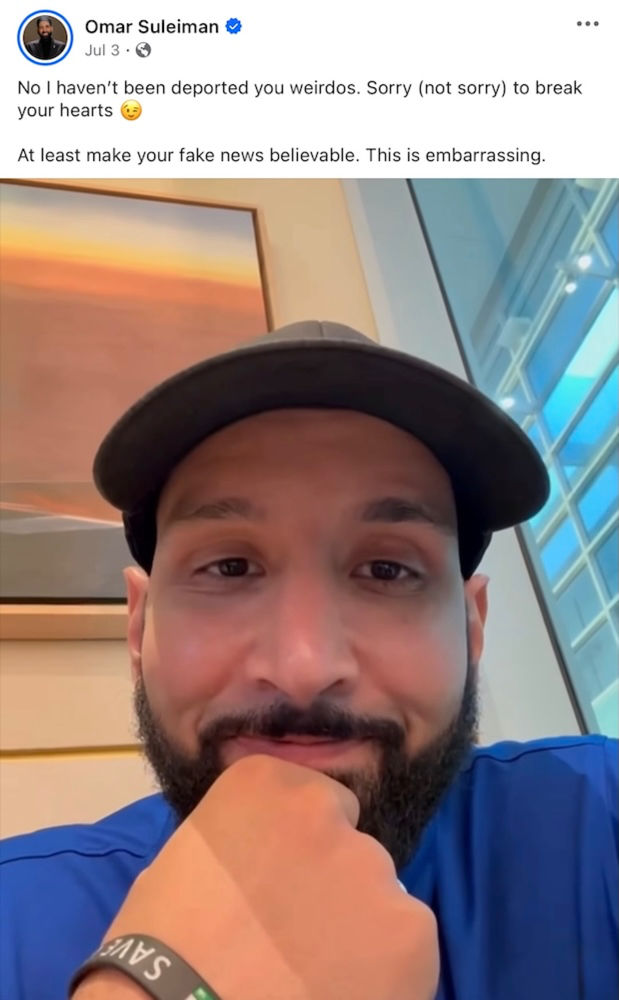
When rumors circulated recently that Omar Suleiman had been deported, he wasted no time responding. He publicly mocked the claim as “fake news” and called it “embarrassing.”
Yet when confronted with documentary evidence raising serious questions about plagiarism and academic misconduct in his PhD, there has been no comparable substantive response … correction: NO RESPONSE AT ALL!
Most strikingly, the emails themselves remain unanswered.
If those emails are fabricated, the response should be simple: “Those emails are fake. I never wrote them.” Or in his own words: “At least make your fake news believable. This is embarrassing.”
If the evidence has been manipulated, identify the manipulation. If the plagiarism analysis is wrong, demonstrate where it is wrong.
Instead: silence … pin.drop.silence 🤫
Silence alone does not legally or logically prove guilt. But silence is not a refutation either — and the contrast matters. He was willing to immediately challenge a false deportation rumor, yet refuses to publicly refute evidence that threatens the integrity of his doctorate.
So readers should ask themselves:
If you were publicly accused of academic fraud using fabricated emails attributed directly to you, would you remain silent — or would the first thing you do be to say, “Those emails are fake”?
That is the question Omar Suleiman has yet to answer.
He found his voice for “fake news.” Why not for the evidence?